Preparing a concrete floor for coating starts with proper cleaning. Before applying epoxy, polyurethane, or another coating system, the surface generally needs to be free of loose debris, dirt, dust, oil, grease, and other contaminants that could interfere with the next stage of preparation.
For large warehouses, workshops, commercial facilities, and industrial floors, the right cleaning equipment can make this process faster and more consistent.
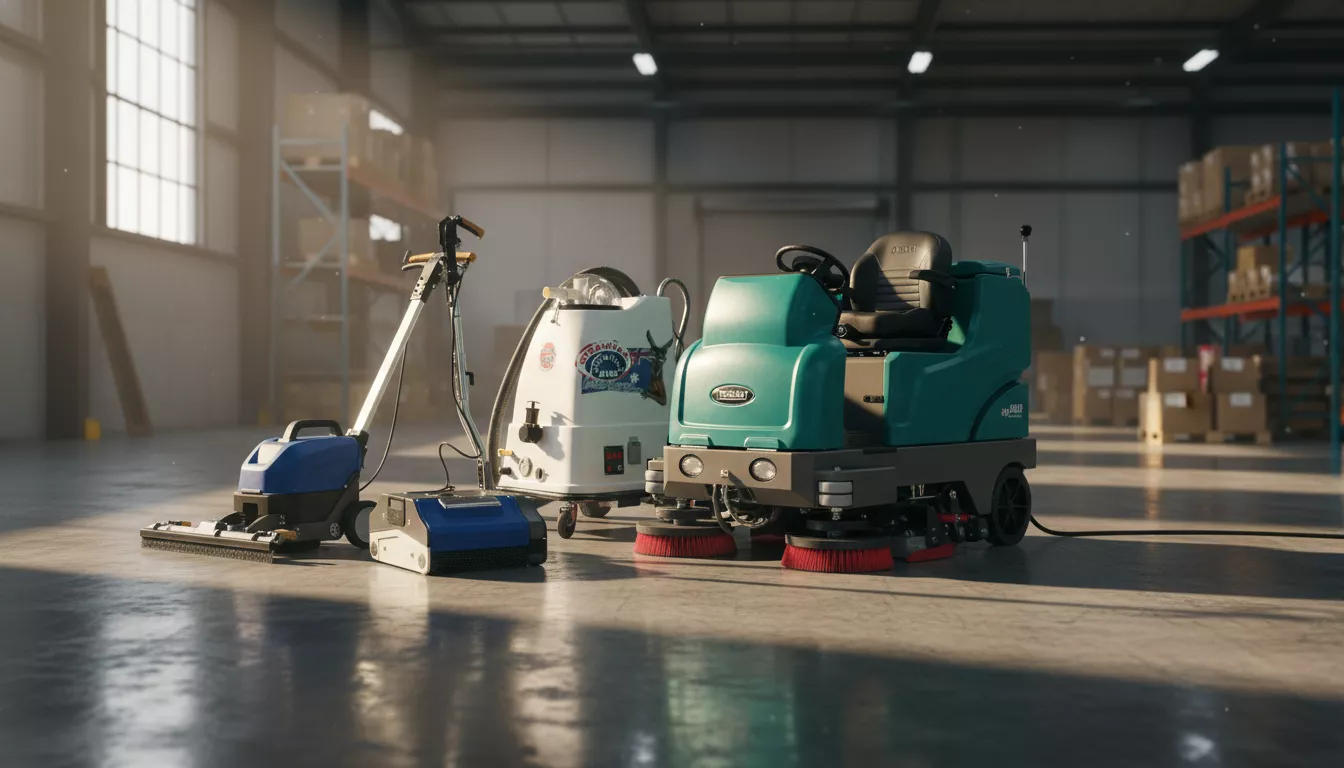
Commercial sweepers, floor scrubbers, and wet/dry vacuums each have different purposes. The right choice depends on the condition of the concrete and the requirements of the coating system.
Cleaning Is Only One Part of Concrete Preparation
A clean concrete floor is not necessarily a coating-ready floor.
Cleaning removes contamination from the surface, while complete coating preparation may also involve concrete grinding, shot blasting, surface profiling, repairs, moisture assessment, or removal of an existing coating.
The exact requirements depend on the coating being installed and the condition of the existing concrete.
Think of sweeping and scrubbing as part of the preparation process—not a replacement for specialist concrete preparation where it is required.
What Should Be Removed Before Coating?
Before choosing equipment, identify what is actually on the floor.
Commercial concrete surfaces can contain:
- Loose dirt, sand, and dust
- Packaging and general debris
- Mud and surface grime
- Oil and grease
- Residue from previous cleaning
- Other contamination from vehicles, machinery, or production activities
Different contamination requires different cleaning methods.
For example, loose debris may be best handled with a sweeper, while attached dirt may require mechanical scrubbing.
When to Use a Sweeper
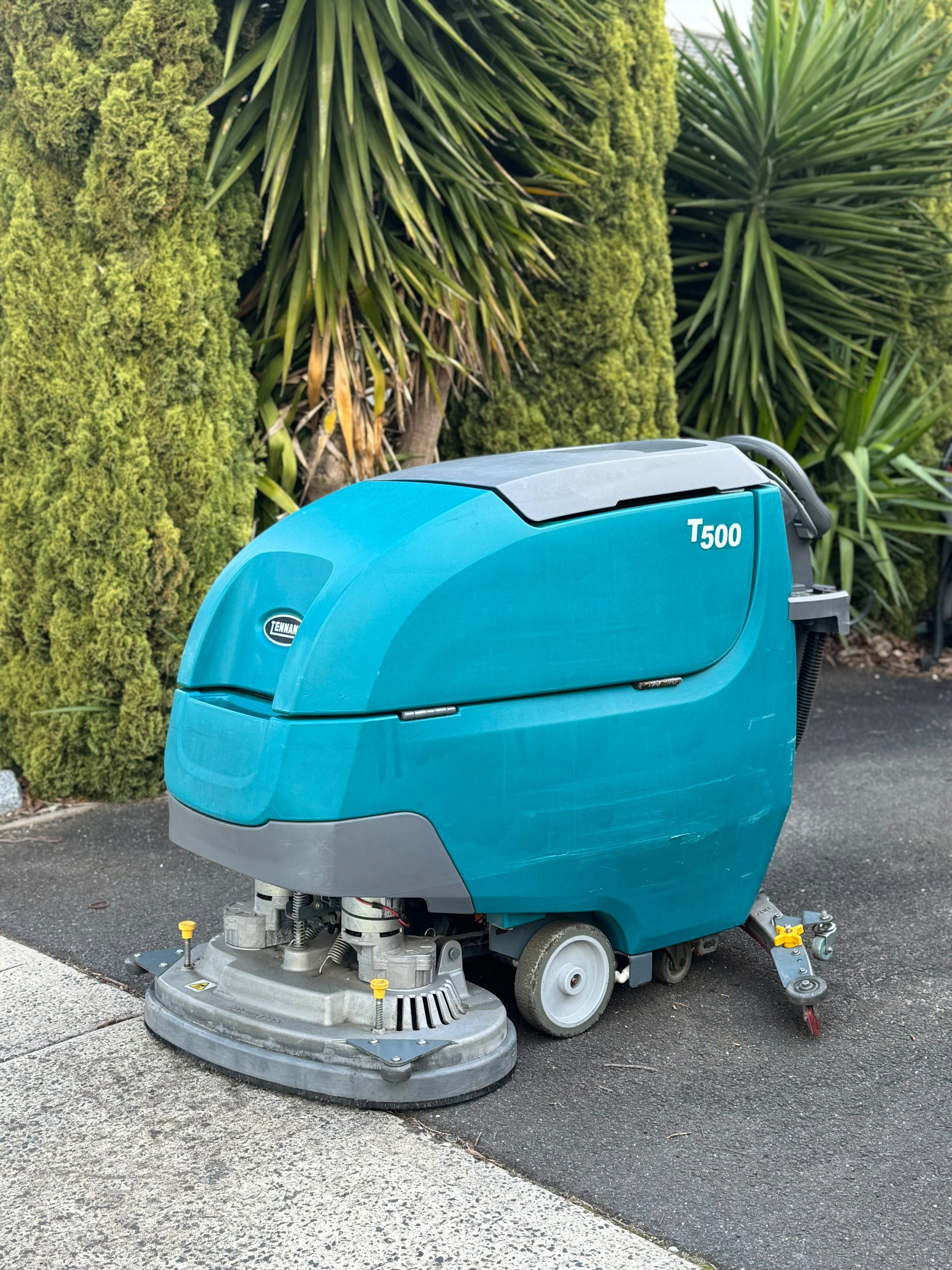
A commercial sweeper is primarily designed to collect loose debris from the floor.
Sweepers can be useful in:
- Warehouses
- Workshops
- Distribution centres
- Car parks
- Industrial facilities
- Large commercial areas
Sweeping is particularly useful when a floor contains significant amounts of dirt, sand, dust, or other loose material.
For heavily contaminated floors, sweeping before scrubbing can also make the cleaning process more efficient.
A simple workflow may be:
Sweep → inspect → scrub → recover → inspect again
The exact process should depend on the condition of the floor and the coating requirements.
When to Use a Floor Scrubber
A floor scrubber is generally more appropriate when dirt or contamination is attached to the concrete surface.
Depending on the machine and cleaning process, a scrubber can help remove general grime, ground-in dirt, mud, and certain oil or grease contamination.
The combination of mechanical agitation, cleaning solution, and water recovery makes commercial scrubbers particularly useful for larger floors where manual cleaning would be slow and labour-intensive.
However, the objective is not simply to make the floor look clean. The surface needs to meet the requirements established for the next stage of preparation.
Sweeper vs Scrubber: Which Do You Need?
| Floor condition | Equipment to consider |
| Loose dirt, sand, and debris | Sweeper |
| General attached dirt | Floor scrubber |
| Loose and attached contamination | Sweeper followed by scrubber |
| Large commercial floor | Ride-on sweeper or scrubber |
| Difficult-to-reach areas | Appropriate vacuum or manual equipment |
| Existing coating or unknown substrate | Specialist assessment |
In some cases, the most effective solution is to use more than one machine.
For example, a large warehouse may first be mechanically swept to remove loose debris and then scrubbed to remove remaining attached contamination.
What About Oil and Grease?
Oil and grease require additional consideration.
Simply passing a scrubber over an oily floor does not automatically make the concrete ready for coating. The appropriate cleaning chemical, agitation, dwell time, recovery process, and number of cleaning passes depend on the type and severity of the contamination.
After cleaning, inspect the surface again rather than assuming one machine pass has completed the preparation.
If a coating contractor has provided specific preparation requirements, those requirements should take priority.
When Is a Vacuum Useful?
A wet/dry vacuum can be useful for collecting remaining debris, cleaning edges and difficult areas, and recovering liquid during certain cleaning tasks.
However, not every vacuum is suitable for every type of dust.
If concrete is being mechanically ground, cut, or otherwise disturbed, the appropriate dust-control and extraction equipment should be selected for that application. A standard wet/dry vacuum should not automatically be treated as suitable for hazardous dust.
Scrubbing Does Not Replace Grinding or Shot Blasting
This is one of the most important points when preparing concrete for coating.
A floor can be visibly clean and still require additional mechanical preparation.
Depending on the coating system and existing substrate, the project may require:
- Concrete grinding
- Shot blasting
- Surface profiling
- Existing coating removal
- Crack or joint repairs
- Moisture assessment
If the concrete does not have the surface profile required by the coating system, simply scrubbing it more thoroughly will not create that profile.
The coating manufacturer or coating contractor should determine what preparation is required after cleaning.
How to Choose the Right Machine
Before hiring or purchasing equipment, consider:
Floor Area
Large commercial floors may benefit from ride-on equipment, while smaller areas may be more suitable for walk-behind machines.
Type of Contamination
Identify whether the floor contains loose debris, general dirt, oil, grease, mud, or other contamination.
Access
Check door widths, aisle widths, ramps, turning areas, and other restrictions before selecting a machine.
Indoor or Outdoor Environment
Consider ventilation, water availability, power availability, drainage, and site operating requirements.
Available Cleaning Time
If the floor needs to be cleaned during a short shutdown or maintenance window, machine productivity becomes particularly important.
Coating Requirements
Confirm what the coating contractor or manufacturer requires from the concrete before selecting your cleaning method.
A Practical Concrete Cleaning Process
For a larger commercial floor, the process may look like this:
- Inspect the floor
Identify contamination, existing coatings, loose material, and other conditions. - Remove loose debris
Sweep dirt, sand, dust, and other loose material. - Scrub the surface
Use an appropriate floor scrubber and cleaning process for attached contamination. - Recover water and debris
Use the machine’s recovery system or appropriate vacuum equipment where necessary. - Inspect again
Check that the required level of cleaning has been achieved. - Complete specialist preparation
Where required, arrange grinding, profiling, repairs, moisture testing, or other specialist preparation. - Handover for coating
Once the required preparation is complete, the floor can proceed to the next stage.
Need Help Choosing Commercial Cleaning Equipment?
Choosing the right machine depends on your floor size, contamination, access, cleaning timeframe, and coating requirements.
If you’re preparing a warehouse, workshop, commercial facility, car park, or other concrete area in Melbourne, Zintra Equipment can help you identify equipment suitable for the cleaning stage.
When enquiring, provide details such as:
- Approximate floor area
- Type of contamination
- Indoor or outdoor location
- Floor access and door widths
- Available cleaning time
- Whether oil or grease is present
- Whether the floor will be coated afterwards
- Any preparation requirements provided by your coating contractor
This makes it easier to select equipment based on the actual job rather than simply choosing a machine by size.
Frequently Asked Questions
Can a floor scrubber clean concrete before epoxy coating?
Yes, a floor scrubber can help remove dirt and surface contamination before coating. However, scrubbing alone does not necessarily provide all the preparation required by an epoxy or other coating system.
Should you sweep concrete before scrubbing?
If the floor contains significant loose debris, sweeping first can remove dirt, sand, and other material before wet scrubbing.
Is a floor scrubber the same as a concrete grinder?
No. A scrubber is designed primarily for cleaning, while a concrete grinder is used for mechanical surface preparation and can alter the concrete surface profile.
Does cleaning concrete mean it is ready for coating?
Not necessarily. Cleaning removes contamination, but the coating system may require additional preparation such as profiling, grinding, repairs, or moisture assessment.
What machine is best for a large concrete floor?
The right machine depends on the floor size, contamination, access, environment, and available cleaning time. Large commercial areas may benefit from ride-on sweepers or scrubbers, while smaller areas may require walk-behind equipment.